
How to make yourself do boring things: pair them with something you love
Paweł, creator of Habit Bank · 11 min read · Updated October 27, 2026
To make yourself do boring things, give them something you enjoy instead of looking for more willpower. Pair the dull habit with a treat you only get while doing it: the podcast you're hooked on plays only on your walk, your favourite playlist only while you clean. Researchers call this temptation bundling, and the treat does the pulling.
What do you do while you're doing the habit you keep putting off?
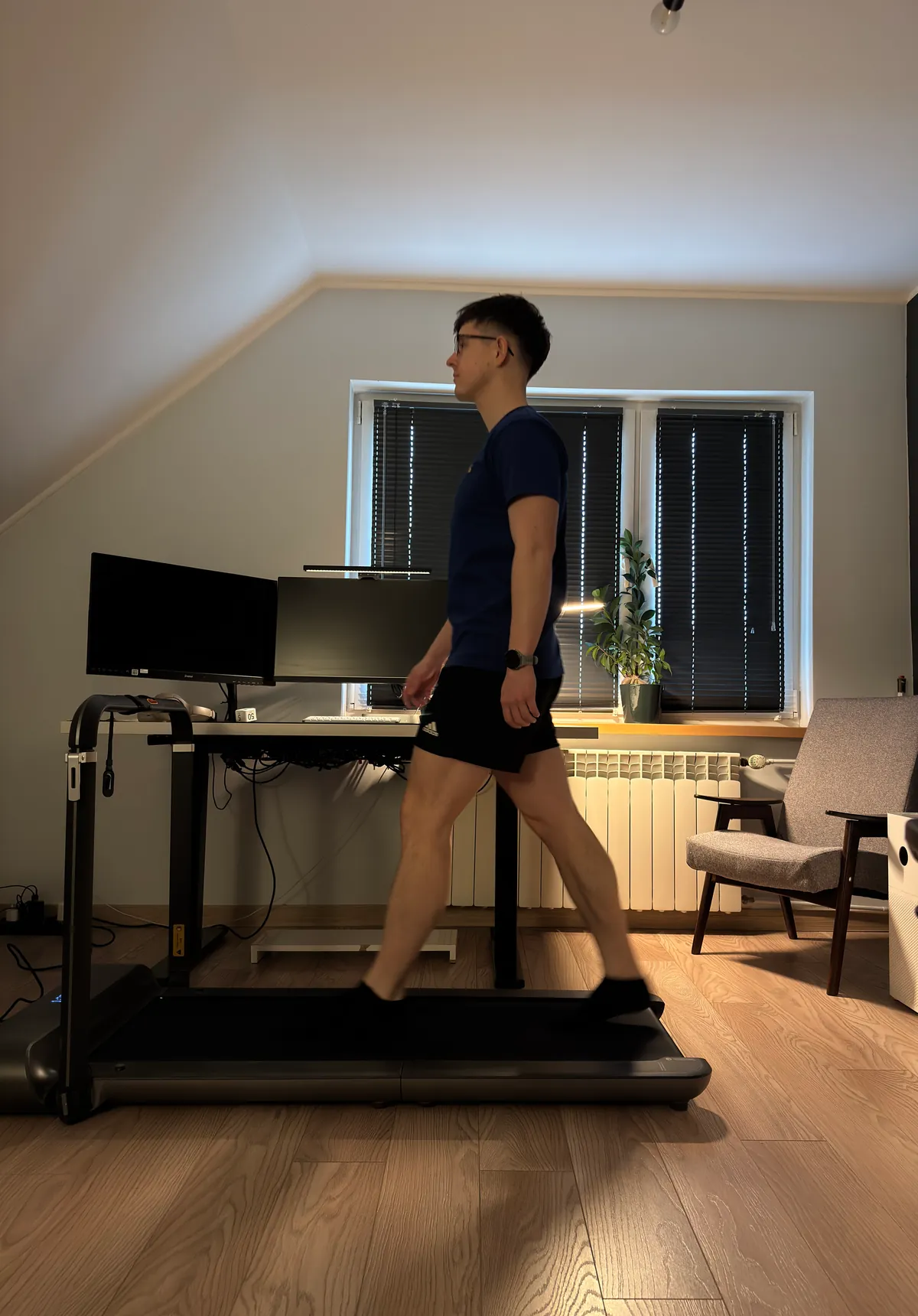
Here is a walk that ends early.
- walk: 30 min
6:30 pm
You step onto the walking pad. The plan is 30 minutes, and the only thing to look at is the timer.
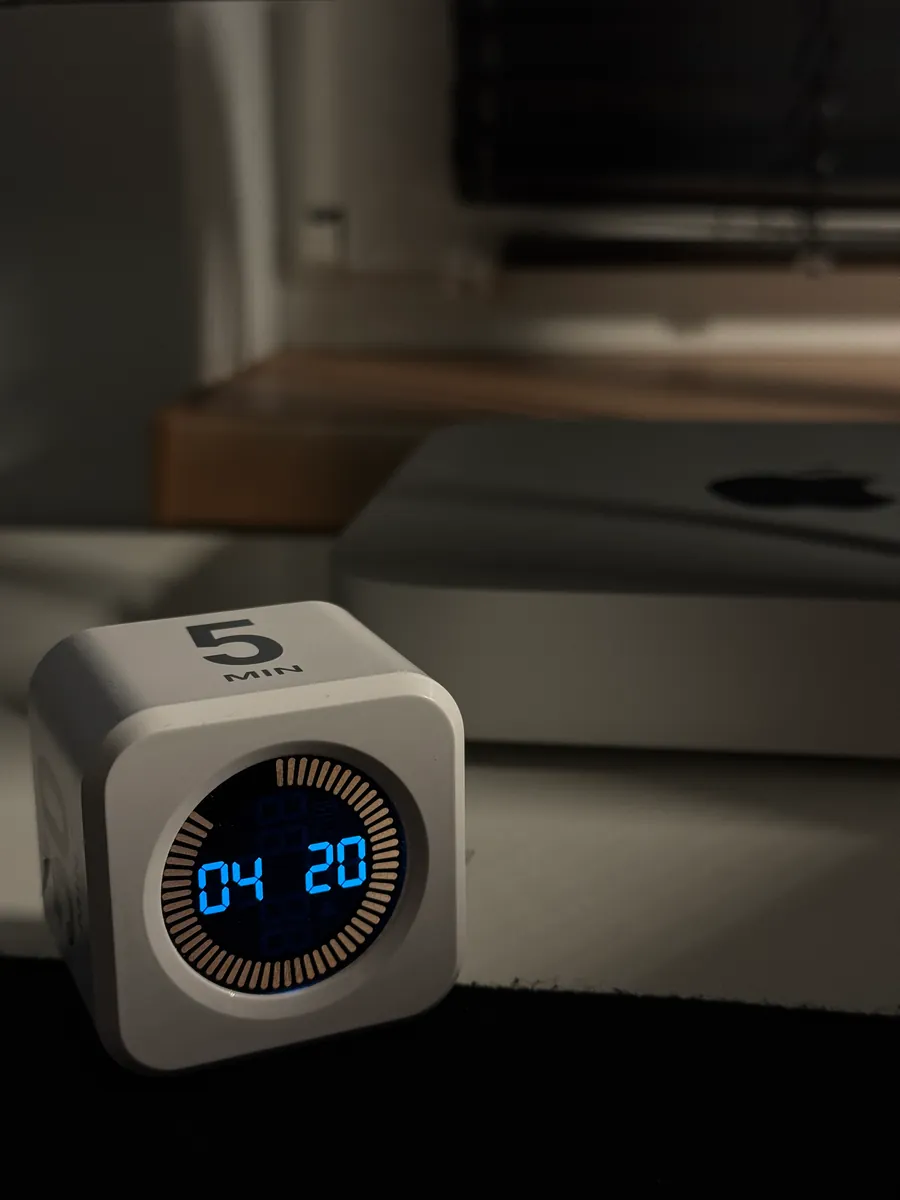
Minute 4
You check the timer. Then again at minute 5, and once more before minute 6.
- pace: slower
Minute 11
The phone is out. You scroll with one hand, and your pace drops without you noticing.
- 14 / 30
Minute 14
You step off. Fourteen minutes will do for today.
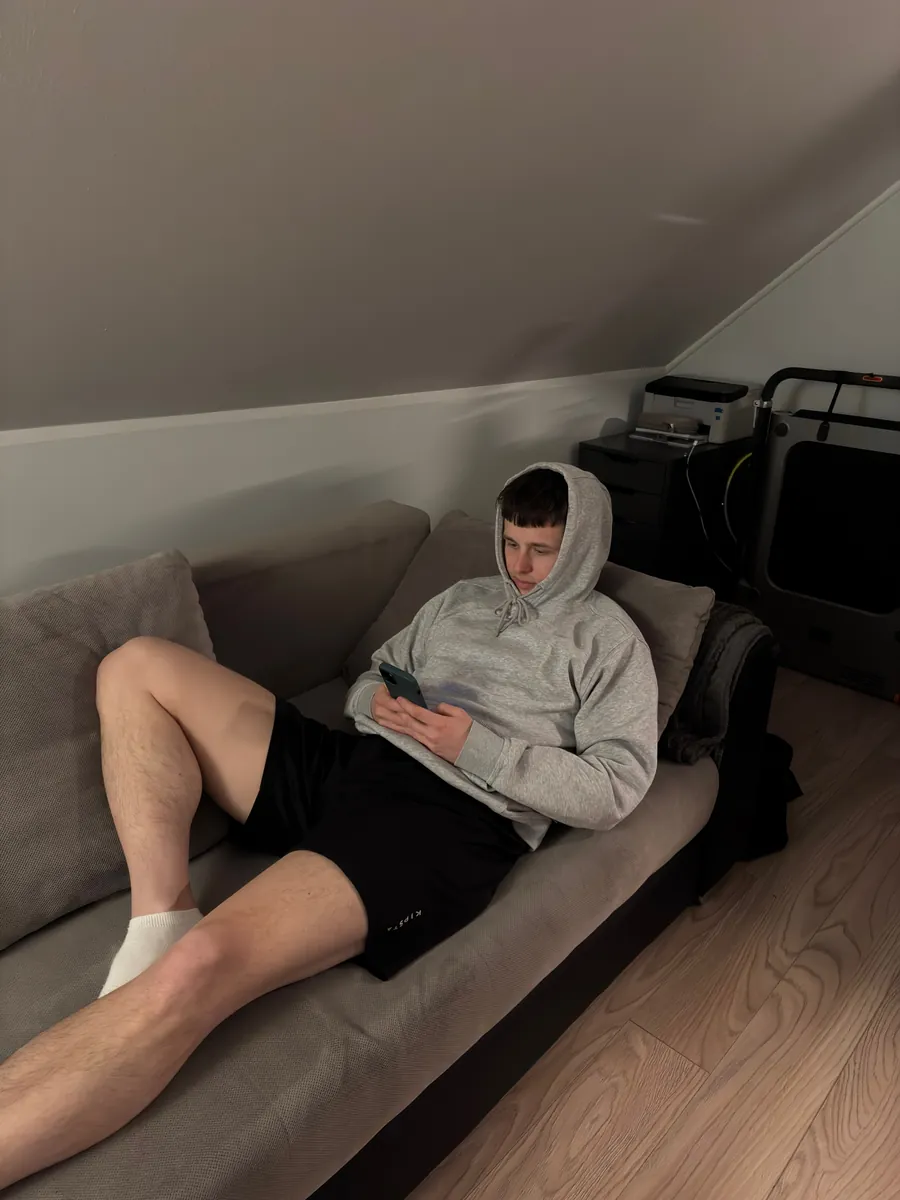
9:40 pm
On the sofa, phone in hand, with the walking pad folded behind you. An hour of videos goes by and you don't check the time once.
At minute 14 you still cared about the walk, but your mind had run out of things to do. At 9:40 the phone gave it something, and an hour went by on its own.
Why is it so hard to do things that are good for me?
Researchers who study self-control sort everyday choices into wants and shoulds. Katherine Milkman, Todd Rogers and Max Bazerman reviewed that research in 2008. A should pays off later and often costs you something now: a workout, an hour of revision, an early night. A want is the reverse: pleasant now, with little to show for it later. When the two meet on the same evening, the want often wins. My post on why habits die in the second week covers that pull toward now.
That explains why you put a good habit off. It doesn't fully explain why the habit feels so dull while you're doing it, even on the days you show up.
Why a habit you care about can still bore you
The psychologists Erin Westgate and Timothy Wilson describe boredom as having two separate sources. One is meaning: what you're doing doesn't connect to anything you value. The other is attention: the task asks too little of your mind, or too much, for what you have to give at that moment. In their studies, a shortfall in either one was enough to make people bored, even with the other in place.
So caring about the result covers only half of it. My reading, not theirs: a walk, a round of stretches or a pile of ironing keeps your body busy and leaves your mind almost idle. You can value the habit and still be bored stiff while doing it.
Enjoyment in the moment also seems to be what keeps people going. Kaitlin Woolley and Ayelet Fishbach found that people who picked the exercise they would enjoy most, rather than the one they judged most useful, persisted longer. In another of their studies, playing music in a high school classroom made students persist longer too. Their conclusion was that people stick with a goal longer when they pay attention to what they enjoy about it today than when they think about what it will bring them later.
Temptation bundling: what the studies found
Katherine Milkman, Julia Minson and Kevin Volpp named the technique and tested it in 2014. In a study of 226 people at a university gym, one group got iPods loaded with gripping audiobooks that they could only listen to at the gym, because the iPods stayed there. A second group got the same audiobooks on their own devices and was only encouraged to keep them for workouts. A control group got no audiobooks.
At first, the gym-only group went to the gym 51% more often than the control group, and the encouraged group 29% more often. Then the effect shrank, most of all after the Thanksgiving break. After the study, most participants (61%) chose to pay for the same arrangement, audiobooks they could only hear at the gym. Many of them wanted the restriction for themselves.
In a study published in 2020, Erika Kirgios, Milkman and colleagues tested a much larger version with 6,792 members of the US gym chain 24 Hour Fitness. Everyone was in a four-week exercise program with text reminders before each planned workout. One group also got a free audiobook and was taught to temptation bundle, a second got only the audiobook, and a third got neither. Compared with the third group, the taught group was 10 to 14% more likely to work out in a given week and averaged 10 to 12% more workouts a week. The difference was still there up to 17 weeks after the program ended. The audiobook on its own helped too, and teaching the technique on top of it added only a little. The researchers couldn't see whether anyone actually listened while exercising.
My takeaway from the two studies: a bundle helps, but by less than the first headline number suggested, and a want you can only get during the habit pulled harder than one you were merely asked to save.
James Clear's Atomic Habits (2018) later brought temptation bundling to a wide audience, under the book's second law, "make it attractive".
How to make boring tasks fun in 5 steps
- Pick a want you already reach for. Choose what you keep going back to, even when nobody would call it worthwhile: the podcast you're behind on, a series that ends every episode on a cliffhanger, an audiobook you don't want to stop. The 2014 study picked audiobooks that were hard to put down.
- Match the want to what the habit leaves free. This is my own use of Westgate and Wilson's idea about attention. If the habit keeps your hands and legs busy but your mind idle (walking, cleaning, ironing, stretching, cooking), give your ears or eyes the want. If the habit needs your head (studying, writing, reading), a story will compete with it, so keep the want for straight after.
- Make the want exclusive. The next episode only plays on the walk. The cleaning playlist doesn't exist outside cleaning. In the 2014 study, the people whose audiobooks stayed at the gym did better than the people who were only asked to save them. Make the rule physical if you can: the headphones live next to the walking pad, not on the sofa.
- Line up the next want before this one runs out. Books end and seasons finish. Kirgios and colleagues suspect that the people taught the technique kept benefiting partly because they could choose their next treat, while people handed a single audiobook had nothing left when it ended. The researchers didn't measure this, so treat it as their guess. Having the next one ready costs you nothing either way.
- Restart the bundle on purpose after a break. The 2014 effect dropped most after a holiday. A trip or a sick week will interrupt yours too. On the first day back, the episode you saved is your way back in.
Examples: bundles you can try this week
| Habit | Why it drags | The want, only during it | How to keep it exclusive |
|---|---|---|---|
| Walking | Thirty minutes with nothing to look at | The podcast you're behind on | New episodes only once you're on the move |
| Cleaning the flat | Repetitive, and it never feels finished | A playlist made only for cleaning | It never plays anywhere else |
| Washing up | Hands in the sink, nothing else to do | The next chapter of an audiobook | It only plays at the sink |
| Stretching | Slow, and nothing seems to change | Ten minutes of a stand-up special | It stays on the laptop by the mat |
| Cooking dinner | The same steps every evening | A weekly call with a friend, on speaker | You call while you cook, not later from the sofa |
| Paperwork | Needs some attention and gives nothing back | A pot of the good tea | You only brew it when the folder is open |
| Studying | Needs all of your attention | Not during: the episode waits until the session ends | Pause the series where you stopped, then open the notes |
When it doesn't work
- When the task needs your full attention. A story in your ears competes with studying or writing. Even for exercise, the authors of the 2020 study note that a bundle might distract people or lower the intensity of a workout, which they couldn't measure. For focused work, put the want after, not during.
- When the want leaks out. If you watch the series on the sofa anyway, the walk is no longer the only way to get it, and the pull fades. In 2014 the group that was only asked to save its audiobooks gained less than the group whose audiobooks stayed at the gym.
- When the effect wears off. In the first study the gain shrank within weeks. Expect to refresh the bundle, and don't call it a failure because week six is weaker than week one.
- When the want works against the habit. A pastry after every run you do to lose weight, or scrolling that keeps pulling you off the mat, takes back what the habit is supposed to give you. Pick a want that doesn't undo the should.
- When you never get started. A bundle makes a habit more pleasant once you're in it. If you never even reach the walking pad, the missing piece is a cue, which is what my post on consistency without motivation is about.
- When it isn't boredom at all. If everything feels flat and hard to start, not just one habit, it may be depression, burnout or ADHD, and a podcast won't fix that. Talk to a professional.
How I do it myself
Walking is my most boring habit. I walk on a pad under my standing desk, and on days without calls there was nothing to do on it but watch the minutes go up, which is where the story at the top of this post comes from.
So I made a rule: the podcast I'm hooked on only plays while I'm on the pad. If I want the next episode, I have to be walking. That makes me the encouraged group from the 2014 study, not the gym-only one, because nothing stops me from playing it on the sofa. I have, more than once, and those were the weeks my walks got shorter.
In Habit Bank I run a looser version of my own. Everything I want, from a pizza day to a PS5 game, has a price in points, and the points only come from habits. It isn't temptation bundling in the strict sense, because the reward comes after the habit, not during it, but the want still waits behind the should.
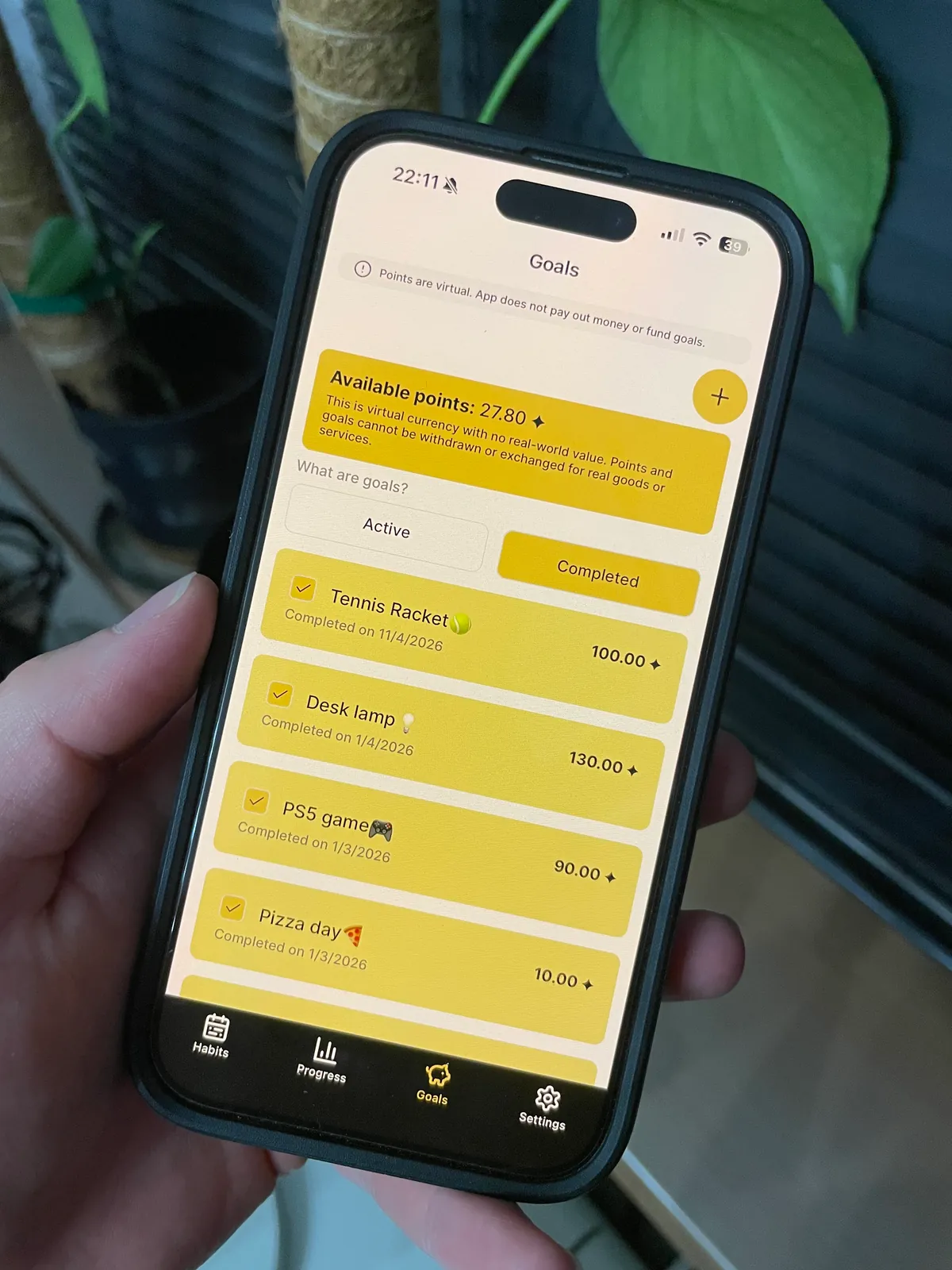
Nothing I want is free anymore.
Frequently asked questions
›What is temptation bundling?
Pairing something you should do but keep putting off with something you enjoy, and allowing yourself the enjoyable part only while you do the other. For example, the podcast you're hooked on only plays while you walk. Katherine Milkman, Julia Minson and Kevin Volpp named the technique and tested it first, in a 2014 gym study.
›Does temptation bundling work?
In two gym studies it helped, though less than the first one suggested. In 2014, people with audiobooks they could only hear at the gym went 51% more often at first, but the effect shrank over the following weeks. In a 2020 study of 6,792 gym members, the gain was 10 to 12% and lasted months.
›What is the difference between temptation bundling and habit stacking?
Habit stacking ties a new habit to one you already do, so the old habit becomes the cue, for example stretching right after you close your laptop for the day. Temptation bundling ties a habit to something you enjoy, so the treat does the pulling. One tells you when to start. The other gives you a reason to want to.
›How do I make a boring task fun?
Give your mind something to do while your hands do the task, or move the task somewhere you like being. A podcast during the dishes, a playlist you only play while cleaning, a good tea you only make for paperwork. If the task needs all your attention, keep the treat for afterwards so it doesn't compete with the work.
›Why are good habits so boring?
Partly because the effort comes now and the payoff later. Partly because many good habits keep your body busy and leave your mind with nothing to do. The psychologists Erin Westgate and Timothy Wilson found that a task that doesn't hold your attention can bore you by itself, even when it matters to you.
Put a price on what you want
In Habit Bank you set your own rewards and give each one a price in points. The points only come from doing your habits. Free on iOS.
More habit techniques
Make it obvious
How to be consistent without motivation: put the habit where you'll see it
Motivation is high when you make the plan and gone by evening. Why consistency comes from cues, not willpower, and how to put a habit where you can't miss it.
· 11 min read
Make it satisfying
Why can't I stick to habits? What goes wrong in the second week
Many habits die in the second week: the effort is due every day, the results come months later. Why that gap breaks you, and how to get a reward today.
· 11 min read
Paweł, creator of Habit Bank
Paweł Konieczny is a software developer from Poland and the creator of Habit Bank, the habit tracker that takes points away when you skip.
Sources
- Milkman, K. L., Rogers, T., Bazerman, M. H. (2008). Harnessing our inner angels and demons: What we have learned about want/should conflicts and how that knowledge can help us reduce short-sighted decision making. Perspectives on Psychological Science, 3(4), 324–338.
- Westgate, E. C., Wilson, T. D. (2018). Boring thoughts and bored minds: The MAC model of boredom and cognitive engagement. Psychological Review, 125(5), 689–713.
- Woolley, K., Fishbach, A. (2016). For the fun of it: Harnessing immediate rewards to increase persistence in long-term goals. Journal of Consumer Research, 42(6), 952–966.
- Milkman, K. L., Minson, J. A., Volpp, K. G. M. (2014). Holding the Hunger Games hostage at the gym: An evaluation of temptation bundling. Management Science, 60(2), 283–299.
- Zankey, M. (2014, January). Guilty pleasures and obtaining goals. Penn Today, University of Pennsylvania.
- Kirgios, E. L., Mandel, G. H., Park, Y., Milkman, K. L., Gromet, D. M., Kay, J. S., Duckworth, A. L. (2020). Teaching temptation bundling to boost exercise: A field experiment. Organizational Behavior and Human Decision Processes, 161, 20–35.
- Clear, J. (2018). Atomic Habits. Avery.